Health Care
Q&A with Michael Ernst about the future of aspirin prescribing
Friday, January 25, 2019
Michael E. Ernst—a clinical professor in the UI College of Pharmacy Department of Pharmacy Practice and Science—co-authored October research papers that were based on the Aspirin in Reducing Events in the Elderly (ASPREE) trial. The study concluded that low-dose aspirin may do more harm than good in healthy older adults.
Kim Reynolds: Let's train more psychiatrists to counter rural mental health shortage
Friday, January 25, 2019
Iowa could soon be cranking out twice as many new psychiatrists as it did in 2017, if legislators follow Gov. Kim Reynolds’ plan to pay for more psychiatric training at the University of Iowa.
From the Bench to the Chair: Translational and Clinical Research at the College of Dentistry
Friday, January 25, 2019
Dental researchers at the college have a strong history of pursuing basic, clinical, and translational research in a collaborative and supportive environment with the goal of improving patient care.
Parker receives $2.1 million grant to study the cerebellum and its role in cognitive function
Friday, January 25, 2019
Assistant Professor of Psychiatry Krystal Parker received a five-year, $2.1 million grant from the National Institute of Mental Health to continue exploring the idea that the cerebellum may play a key role in cognitive function and may be targeted in diseases such as schizophrenia, autism, bipolar disorder, and Parkinson’s disease.
Scientists funding humanities research: CLAS names 2018-19 DSHB Faculty Scholars
Friday, January 25, 2019
To ensure that aspiring University of Iowa scientists are learning from humanities professors at the forefront of research in their disciplines, the UI's Developmental Studies Hybridoma Bank funds research awards for humanities faculty in the College of Liberal Arts and Sciences. CLAS administers the grants and selects the recipients..
UI study finds fried food increases likelihood of early death
Friday, January 25, 2019
A study from the University of Iowa College of Public Health finds that eating just one portion of fried food a day leads to a significantly increased probability of an early death, especially in post-menopausal women.

UI students develop app to improve public speaking—without imagining the audience in their underwear
Wednesday, January 23, 2019
A team of Iowa students started Speeko, a voice-analytics company that uses artificial intelligence to help individuals avoid unfortunate public speaking experiences by measuring and improving their verbal communication skills.

UI brings science to Iowa children
Tuesday, January 15, 2019
The University of Iowa is leading a series of activities to educate Iowa youth about science. The Science Booster Club began in 2015 and has expanded to include fun, hands-on activities for children in Muscatine and the Quad Cities.
Oral Science PhD student makes her patients smile
Friday, January 4, 2019
Eman Ismail, a Saudi-trained dentist and a PhD student in the Oral Science Program at the University of Iowa, uses dental composites to treat broken teeth with the goal of improving outcomes in dental-restoration procedures.
Federal grants will help develop strategies to combat addiction by native populations
Friday, January 4, 2019
Anne Helene Skinstad, clinical professor in the College of Public Health, has recently been awarded grants totaling $9.5 million over the next five years to help reduce drug and alcohol addiction among American Indian and Alaska Native populations.

Study finds tele-ERs save money, improve physician recruitment in rural hospitals
Monday, December 3, 2018
A new study from the University of Iowa finds rural hospitals that use telemedicine to back up their emergency room health care providers not only save money but find it easier to recruit new physicians.
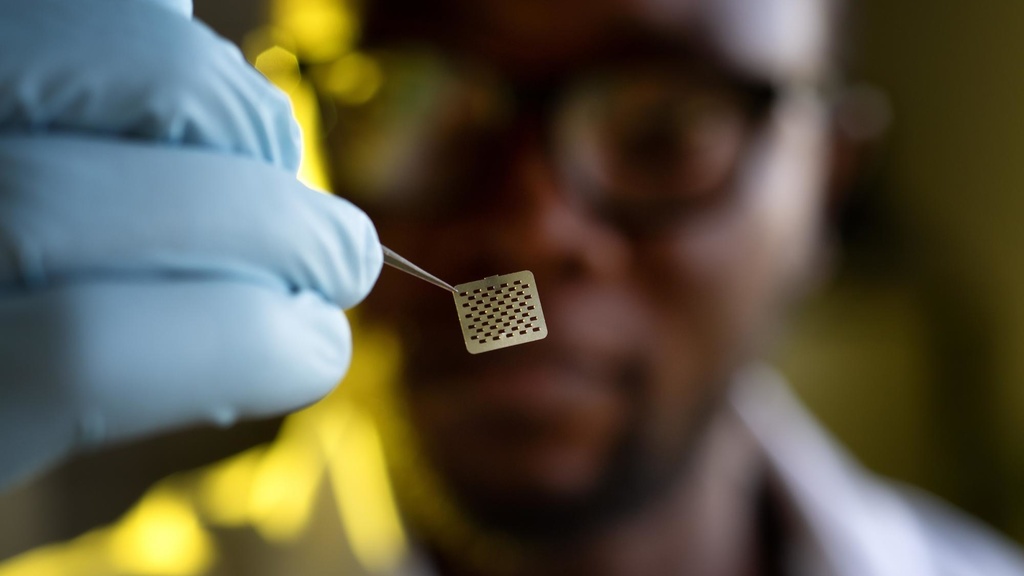
Iowa researchers look to expand use of micropatches to improve health care locally, globally
Friday, November 30, 2018
Micropatches could change the way vaccines and medicines are delivered in the U.S. and around the world, including many developing countries. Iowa researchers are testing the use of these patches on diverse populations to ensure patients receive optimal health benefits.