Health Care
Timing may be key to understanding cognitive problems in Parkinson’s disease
Thursday, December 15, 2016
A University of Iowa study has shown that stimulation to replace missing brain waves improves cognition in mice lacking dopamine, raising the possibility of using frequency-specific brain stimulation to improve problems caused by Parkinson’s disease.
How diabetes harms the heart
Tuesday, December 13, 2016
Research from the University of Iowa and the University of California at Davis finds that two different drugs—a beta blocker and an antidepressant—might both have potential for preventing or treating heart failure associated with diabetes by blocking an insulin signaling pathway in heart muscle.
Petersen honored for Leishmaniasis study
Wednesday, December 7, 2016
A paper co-authored by Christine Petersen, professor of epidemiology in the College of Public Health, has been selected for publication in WorldLeish-6, a collection of research papers about the parasitic disease Leishmaniasis.
Change of date for move-in and opening of UI Stead Family Children’s Hospital
Wednesday, November 30, 2016
The University of Iowa Stead Family Children’s Hospital is postponing its move-in until late January or early February 2017. The safety and comfort of patients, their families, and staff are the top priorities, and officials determined that they are close but not quite ready to move into the new facility.
Despite elusive cure, AIDS diagnoses decline
Monday, November 28, 2016
More than 2,100 patients have been treated at the University of Iowa’s HIV/AIDS clinic since it opened in 1988, and it remains the state’s largest such clinic. Jack Stapleton, director of the clinic and an expert in infectious diseases, talks about how a diagnosis of HIV has changed since then.
Roy J. Carver Charitable Trust gives $45 million to University of Iowa to support Iowa Neuroscience Institute
Monday, November 28, 2016
The Roy J. Carver Charitable Trust has committed a $45 million grant to the University of Iowa that will allow for the creation of a comprehensive and cross-disciplinary neuroscience center within the University of Iowa Roy J. and Lucille A. Carver College of Medicine.
Study questions usefulness of ‘rainbow draw’
Friday, November 18, 2016
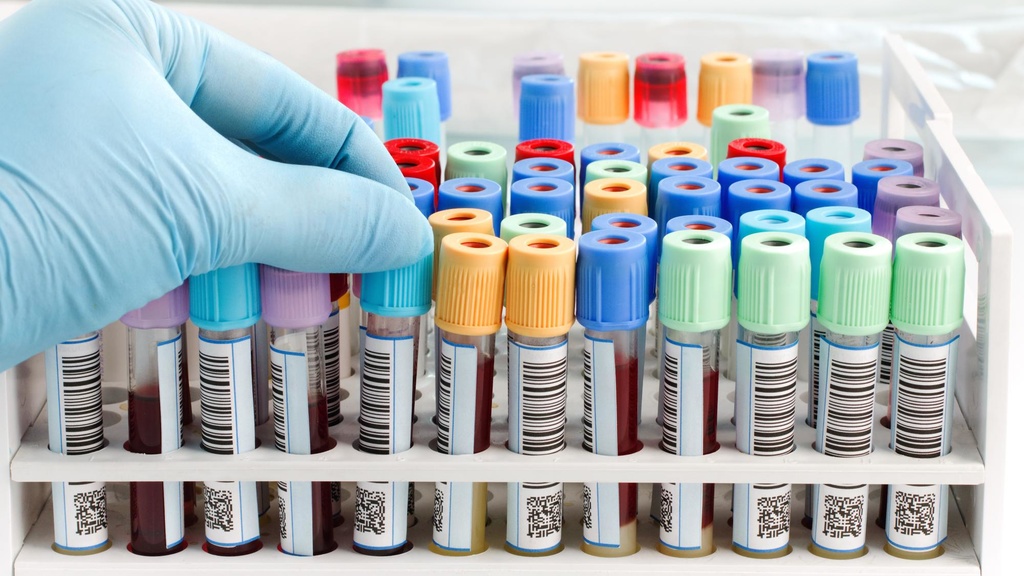
University of Iowa researchers have shown that most of the extra vials of blood drawn for lab tests never get used and are instead discarded.
University of Iowa announces composition of search committee to replace Robillard
Thursday, November 17, 2016
The University of Iowa has announced the composition of the search committee for the next vice president for medical affairs and dean of the University of Iowa Roy J. and Lucille A. Carver College of Medicine. The first meeting of the 17-person committee will be held Thursday, Dec. 1.

Turning a dream into a reality
Monday, November 14, 2016
The University of Iowa dedicated the new UI Stead Family Children’s Hospital on Nov. 11, 2016. The 14-story, 507,000-square-foot facility will offer private rooms for all patients, eight pediatric operating rooms, a pediatric pharmacy, a playground, gardens, a library, and an interactive theater.
Simmering publishes research in COPD journal
Monday, November 14, 2016
A research paper by University of Iowa graduate student Jacob E. Simmering has been published in Chronic Obstructive Pulmonary Diseases: Journal of the COPD Foundation (JCOPDF).
Baker shares expertise on toothpaste ingredients
Friday, November 4, 2016
Reality check: Tooth whiteners aren’t concentrated enough or in contact with the tooth surface long enough to be effective, says Karen A. Baker, an associate professor at the University of Iowa College of Dentistry in Iowa City and an expert on toothpaste ingredients.
UI College of Public Health researchers participate in children’s migraine study
Tuesday, November 1, 2016
A study that questions the use of certain drugs to help children suffering from migraine headaches is garnering national attention. The University of Iowa’s College of Public Health contributed to the research.