A University of Iowa researcher has won more than $500,000 in grants to merge machine learning with a technique called transcranial magnetic stimulation to deliver individualized treatment in the brain for stroke survivors.
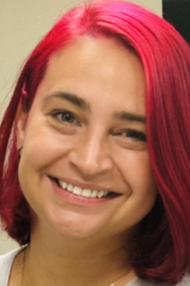
Sara Hussain, assistant professor in the Department of Health, Sport, and Human Physiology, is the principal investigator.
Hussain said stroke often disrupts the corticospinal tract, a nerve pathway that sends signals from the brain to the spine, allowing the body to make voluntary movements in the arms, legs, and torso.
Hussain’s research seeks to restore the brain-spine pathway through transcranial magnetic stimulation (TMS), which sends magnetic pulses to the brain, helping to stimulate the corticospinal tract and improve its function after stroke.
The technique has to date been limited in improving corticospinal tract function because for maximum benefit, each pulse must occur when this pathway is most active.
When the pathway is most active, the TMS pulses enhance the brain-spine connection and improve fine motor skills. However, when the pathway is inactive, pulses can decrease the brain-spine connection.
Because the brain is constantly alternating between these two states, it is difficult to predict when the pathway will be most active.
Hussain addresses this by feeding electroencephalography (EEG) data, measurements collected from electrodes placed on the scalp, to a machine learning model.
Machine learning enables computer systems to cluster data and relate those data clusters to neurological signals. In this project, Hussain will analyze EEG to predict when a pulse would be most beneficial.
Each stroke survivor's pattern of brain damage is unique, so the machine learning system personalizes when TMS pulses are delivered, so they occur when the corticospinal tract is most active.
Hussain won two grants for the research. One is from the National Institute of Neurological Disorders and Stroke, for $229,000. The other is from the Eunice Kennedy Shriver National Institute of Child Health and Human Development, for $226,000.
Hussain earned her bachelor’s and doctoral degrees from Iowa and returned to Iowa as a faculty member last year. She won the awards while at the University of Texas-Austin but will continue the work at Iowa.
“We are excited to bring noninvasive neurotechnology to the stroke rehabilitation landscape here at the University of Iowa and look forward to working with Iowans as we advance the science of poststroke motor recovery,” Hussain says.