A University of Iowa faculty member has been awarded funding from the National Institutes of Health and the National Institute on Aging to develop and test an AI chatbot that can help improve care for people with dementia.
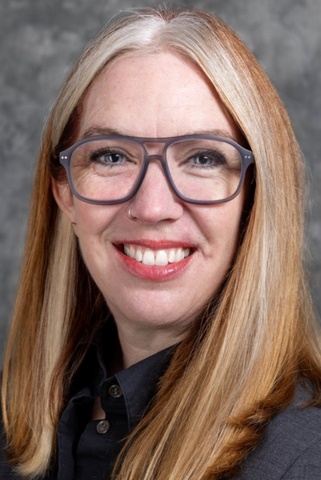
Katherine Carroll Britt, assistant professor in the College of Nursing, and Bin Huang, principal scientist at BrainCheck, Inc., are the co-principal investigators on the research, which seeks to assist dementia dyads — a person living with dementia and their caregiver. Many caregivers report feeling overwhelmed and uncertain about cognitive care recommendations. The chatbot aims to overcome that by providing guidance on lifestyle, medications, safety, and behavioral management.
The tool will draw from published research and professional sources such as the Alzheimer’s Association. Britt and Huang will expand the chatbot by curating common questions from dementia care specialists, such as nurses, social workers, neurologists, and geriatricians. These questions will inform and refine the chatbot to ensure its guidance is personalized, accurate, and compassionate, the researchers say.
The AI system will cover a range of topics, including dementia diagnosis and prognosis, ways to slow cognitive decline, strategies for managing behavioral challenges — such as wandering or agitation — safety, and a list of local resources. Although the chatbot would be designed to provide individualized attention based on a patient’s stage of dementia and care, it would not prescribe medication.
“I am really excited about this award because it will allow us to create and test a needed support for family caregivers and older adults living with dementia through the creation of a tool using large language models,” Britt says. “This digital tool will provide in-home support for caregivers and adults living with dementia to ask their questions and receive knowledgeable and tailored responses for additional support.”
As a first step, Britt and Huang will interview dementia dyads to document their experiences before creating a pilot chatbot. Feedback from an initial group of participants will be used to refine the chatbot.
The one-year award is for $185,000.