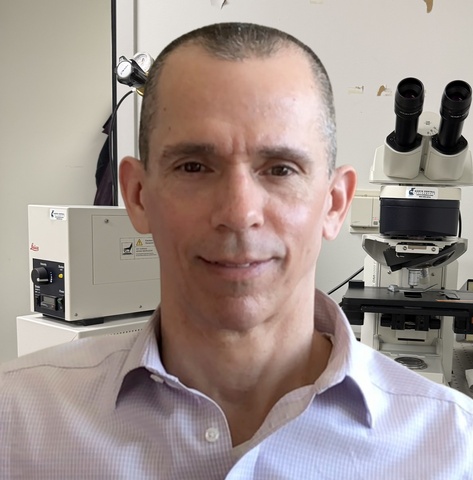
As the holiday season ramps up, stress can feel unavoidable. University of Iowa psychological and brain sciences professor Jason Radley, a global and national expert on the neurobiology of stress, suggests some ways to help.
Radley’s research shows that while chronic stress can rewire the brain in harmful ways, people who actively confront life’s stressors tend to have lower levels of stress hormones. Radley’s lab is also exploring the brain circuitry behind resilience, all with the goal of creating treatments that could help people lead healthier lives by managing stress more effectively.
Q: What does your research reveal about stress and coping?
A: We’re interested in how the brain controls active versus passive coping. Active coping means taking steps to resolve or reduce stress. Passive coping is more like avoidance or withdrawal. In animals, that might look like freezing or playing dead. In humans, it can be procrastination or ignoring a problem. What we’ve found is that active coping reduces hormonal and cardiovascular stress responses, while passive coping often prolongs stress and its negative effects.
Q: How does stress affect the brain?
A: A single stressful event may not alter the brain, but repeated or chronic stress actually rewires brain circuits. Throughout evolution, those changes may have helped humans and animals endure harsh conditions. In modern society, though, chronic stress often comes from things that aren’t life-threatening, like work pressure or financial worries. In those contexts, these brain changes can make us more vulnerable to disease, anxiety, or depression.
Q: What lessons can people take from this research?
A: Active coping is key. During the holidays, for example, people often feel overwhelmed by shopping, family obligations, and work deadlines. Passive coping might be putting everything off until the last minute, which only increases stress. Active coping could mean tackling tasks in small steps — buying one gift today, cleaning one room tomorrow. Even small progress reduces that sense of being overwhelmed. Limiting exposure to stressors can also be a way to actively cope — for example, reading less news if it raises your blood pressure. Pairing that with something constructive like voting or volunteering makes it proactive. Exercise, problem-solving, and seeking social support are all active strategies.
Q: What’s the ultimate goal of your work?
A: There are two directions. One is identifying places where the brain malfunctions under chronic stress, which could lead to treatments for stress-related disorders. The other is resilience — understanding the circuits that protect people from stress. Some individuals are naturally resilient, and if we can identify what’s happening in their brains, we might be able to develop therapies that increase resilience in others.
Q: Any advice as we head into the holiday season?
A: Don’t wait until the last minute. Break tasks into manageable steps. Engage actively with stressors rather than avoiding them. And remember that resilience isn’t just about handling stress; it’s about building habits that protect you from stress in the first place.